
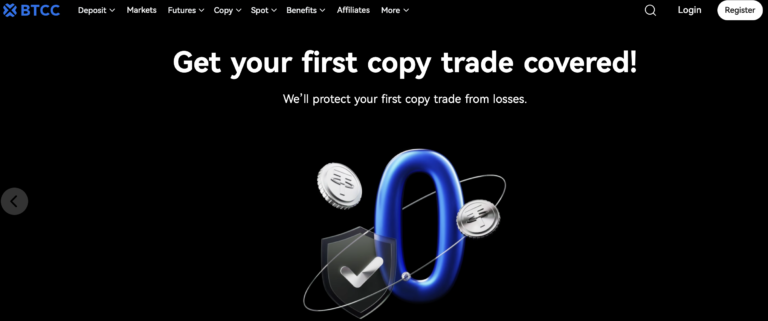
Is BTCC Legitimate or a Scam?
Based on the evidence currently available, BTCC.com itself should not be classified as a scam based on the report reviewed for this article. However, the reported experience contains several warning signs consistent with an impersonation or phishing operation, and anyone who was contacted privately by someone claiming to represent BTCC should verify that person’s identity independently before sending money or personal information.
This distinction matters.
The report describes persistent emails, requests to invest, contact through social media and messaging platforms, pressure to provide additional money, refusal to stop contacting the individual, and alleged threats involving the victim’s personal information.
Those are serious allegations.
But they do not, by themselves, establish that the people responsible were actually employees or representatives of BTCC.
In fact, BTCC itself warns users about precisely this type of behavior. Its security guidance says scammers may impersonate BTCC staff, create fake groups, use phishing websites and contact users through social platforms. BTCC also states that official personnel will not privately message users to request transfers, verification codes or private keys.
That makes the central question much more useful than simply asking whether BTCC is a scam:
Was the person who contacted this individual actually connected to BTCC.com?
What Is BTCC?
BTCC is a cryptocurrency trading platform that says it was founded in 2011. Its current website offers products including spot trading, perpetual futures and copy trading, along with supporting services and educational material.
The company also publishes information concerning security, identity verification, anti money laundering controls and regulatory registrations.
For example, BTCC’s current website identifies BTCC Poland Limited as a Polish company registered under number 0001129321 and says it is entered in Poland’s Register of Virtual Currencies as a Virtual Asset Service Provider.
BTCC also publishes information concerning other entities and jurisdictions associated with its operations, so anyone considering the platform should check the terms and regulatory information applicable to their particular country rather than assuming that one registration applies everywhere.
That is an important point for any international cryptocurrency exchange.
The Report Raises a Different Question
The report supplied for this review presents a very different picture.
According to the complainant, contact continued for more than a month and resulted in a large number of emails. The individual says they eventually requested that their information be deleted and that the communication stop.
They also allege that they were pressured to participate in cryptocurrency trading and lost approximately $2,000.
The report further alleges that the people contacting them refused to stop sending messages and allegedly threatened to expose or “dox” their information.
Those allegations should be taken seriously.
But there is an important limitation.
The report does not establish that the people responsible were employees of BTCC.
There is no independently verified employee identity in the material supplied to us, no verified BTCC email address establishing the sender’s identity, no transaction record demonstrating that the funds were sent to a BTCC-controlled wallet, and no evidence establishing that the reported contacts came through BTCC’s official systems.
Without that evidence, attributing the conduct directly to BTCC would go beyond what the available information supports.
BTCC Does Have Facebook
One of the strongest claims in the supplied report is also one of the easiest to independently test.
The complainant states that legitimate crypto applications do not use Facebook or WhatsApp.
That isn’t correct.
BTCC itself publishes a social media page listing its official channels and includes Facebook among its English language global social media accounts.
So the mere fact that someone claiming to represent BTCC contacted a person through Facebook cannot establish fraud.
At the same time, the opposite is also true.
A Facebook account claiming to represent BTCC is not automatically legitimate just because BTCC has an official Facebook presence.
That distinction is critical.
A scammer can copy a company’s logo, name, photographs, biography and branding.
They can also create accounts with usernames that look remarkably similar to the genuine account.
This is why the identity of the specific account matters more than the platform on which the conversation occurred.
WhatsApp Is Not Proof Either Way
The same principle applies to WhatsApp.
The report treats WhatsApp communication as proof that something is illegitimate.
That is too broad.
Financial fraudsters absolutely do use WhatsApp.
So do legitimate businesses, customer service teams, marketing departments and ordinary customers.
The important question isn’t:
“Was WhatsApp involved?”
The better question is:
“Was this particular WhatsApp account an officially verified BTCC channel?”
That is a much more useful test.
Interestingly, FINRA has specifically warned about investment group impersonation scams in which fraudsters advertise through social media and then move potential investors into encrypted messaging applications such as WhatsApp.
So WhatsApp should certainly trigger caution when unsolicited investment advice is involved.
It simply shouldn’t be treated as conclusive evidence against a particular company.
BTCC Has an Official Verification System
This is one of the most important pieces of information for anyone who has been contacted by someone claiming to represent BTCC.
BTCC operates an Official Verification Channel that allows users to check URLs, email addresses and social media accounts. The company specifically describes the service as a way to help users identify fake links and impersonation attempts.
BTCC’s verification guidance also warns that fake accounts can copy official names, photographs and profile information.
That is particularly relevant to the report reviewed here.
If the complainant still has the original emails, social media profiles, telephone numbers or messaging accounts, those details could potentially provide much more useful evidence than simply identifying the company name.
What Should Be Verified?
If somebody says they work for BTCC, don’t rely on their display name.
Check the actual:
Email address
Website URL
Social media account ID
Telephone number
Messaging account
Wallet address
Payment instructions
The distinction between a display name and an actual account identifier can be surprisingly important.
BTCC’s own verification guidance specifically warns users to check the account identifier rather than relying on a nickname, avatar or profile biography.
A Genuine Website Can Still Be Used in an Impersonation Scam
This is where online investment investigations can become confusing.
Imagine receiving a message from somebody who says:
“I’m a BTCC representative.”
They send you to BTCC.com.
You visit the website.
Everything looks real.
You then assume the person contacting you must also be real.
That conclusion doesn’t follow.
A fraudster can send someone to a genuine website while pretending to be an employee.
They can use a legitimate company’s reputation to establish credibility without having any relationship with that company.
This is a form of brand impersonation.
The same problem exists with banks, payment processors, cryptocurrency exchanges, investment firms and technology companies.
The existence of a legitimate website doesn’t authenticate the person who sent you the link.
The Money Trail Matters More Than the Logo
When investigating a disputed crypto transaction, one of the most useful questions is:
Where did the money actually go?
This is much more informative than asking which company’s logo appeared on a website.
If someone claiming to be a BTCC employee told a user to send Bitcoin to a personal wallet address, that wallet should be investigated.
If the funds went to an address controlled by a third party rather than a verified BTCC deposit address, that could substantially change the nature of the complaint.
Likewise, if the victim was directed to a lookalike domain rather than BTCC.com, the situation becomes considerably more consistent with phishing or impersonation.
This is why transaction hashes, wallet addresses, screenshots and original communications should be preserved.
The $2,000 Loss Deserves Documentation
The report states that approximately $2,000 was lost.
That is a significant amount for an individual, but the dollar figure alone doesn’t establish who received the funds.
A useful investigation would attempt to reconstruct the transaction chronologically.
First, identify the original contact
Save the original email, Facebook profile, WhatsApp account or other communication.
Do not rely on screenshots alone if the original message history is still available.
Next, identify the payment route
Determine whether the funds were:
Transferred directly into a BTCC account
Sent to a third party
Sent to an external cryptocurrency wallet
Purchased through another exchange and then transferred elsewhere
Sent to an address supplied by the person contacting the victim
That distinction can be crucial.
Finally, follow the blockchain transaction
Where cryptocurrency was involved, the transaction hash can often provide an independently verifiable starting point.
Blockchain records cannot necessarily identify the person behind an address, but they can help establish what happened to the funds after the transfer.
FINRA warns that cryptocurrency transactions can be difficult to reverse and that recovery of stolen crypto is uncommon, making early documentation particularly important.
The “Pay More to Get Your Bitcoin” Pattern
The report says the complainant was told that providing additional money would result in Bitcoin being returned or released.
If accurately documented, this would be one of the most concerning aspects of the report.
A demand to send additional cryptocurrency in order to release previously deposited funds is a recognized feature of many cryptocurrency investment frauds.
The FTC warns that fraudulent investment platforms may display apparent account balances and then prevent withdrawals or demand additional payments.
That doesn’t prove BTCC was responsible for the reported conduct.
It does mean that anyone receiving such a request should stop and independently verify the situation before sending another payment.
Threats About Personal Information Are Another Serious Red Flag
The report also alleges that the person communicating with the victim threatened to publish personal information.
If documented, that behavior should not be dismissed as ordinary customer service.
No legitimate investment opportunity should require a customer to tolerate threats simply because they asked for their information to be deleted or asked to stop receiving communications.
There is also a practical reason to preserve these messages.
Threats, account names, phone numbers, email addresses, timestamps and payment instructions can potentially help establish whether the individual was dealing with a legitimate business representative or an unrelated impersonator.
The Claim About Monero Needs Context
The report repeatedly refers to Monero, or XMR, as an illegal cryptocurrency.
That statement is too broad.
Monero is a real cryptocurrency, and its legal and regulatory treatment can vary by jurisdiction and by the particular service offering it.
The presence of XMR in a list of assets therefore does not by itself establish that a cryptocurrency exchange is fraudulent.
This is an important correction because inaccurate claims can make an otherwise useful fraud report less credible.
The stronger question is whether the particular platform or person was lawfully offering the asset to the user in the relevant jurisdiction and whether the transaction was actually conducted through that platform.
What BTCC Says About Impersonation
BTCC’s own anti fraud guidance is particularly relevant here.
The company says scammers may create phishing websites using BTCC branding, impersonate employees, create fake groups and contact people through social media or messaging platforms. It also states that official personnel will not privately message users asking for transfers, verification codes or private keys.
BTCC has therefore publicly acknowledged the broader impersonation problem.
That doesn’t resolve the individual complaint.
But it provides a legitimate reason to investigate whether the person in the report was actually connected to BTCC.
This Is Why the Original Evidence Matters
For a complaint involving possible impersonation, the strongest evidence isn’t a statement saying:
“They used the BTCC name.”
It is evidence showing how they used it.
For example:
An email from a non BTCC domain claiming to be an employee
A WhatsApp account using BTCC branding
A fake website resembling BTCC.com
A wallet address unrelated to the user’s official BTCC account
A request to send funds to a personal wallet
A message demanding additional money
A fabricated withdrawal fee
A threat to expose personal information
A social media account that fails BTCC’s verification system
Each individual piece can be evaluated.
Together, they can create a much clearer picture.
How to Tell Whether You Are Dealing With BTCC or an Impersonator
The safest approach is to start from the official website rather than following the contact’s instructions.
Open BTCC.com independently.
Don’t use a link supplied by the person who contacted you.
From there, use BTCC’s official verification service to check the email address, website or social media account.
BTCC also provides official customer support through its website, including live chat and the published support email address.
If somebody claims to be a BTCC employee, contact BTCC through an independently sourced official channel and ask whether that individual or account is genuine.
What We Think About BTCC.com
Based on the information we could independently verify, we would not label BTCC.com itself a scam based on this particular complaint.
There is insufficient evidence in the report to establish that the people who allegedly pressured the complainant were actually BTCC employees or representatives.
More importantly, several claims in the report are factually too broad.
BTCC does have an official Facebook presence.
BTCC also has an official verification system specifically designed to address impersonation and phishing.
And BTCC itself warns that criminals may impersonate its staff and create fake groups or websites.
That doesn’t mean every complaint involving the BTCC name should be dismissed.
Quite the opposite.
It means complaints should be investigated carefully enough to distinguish BTCC itself from somebody pretending to be BTCC.
Our Assessment of the Report
The reported behavior deserves attention, particularly the alleged persistent contact, pressure to provide additional funds, refusal to stop communications and alleged threats involving personal information.
Those are serious red flags.
However, the evidence currently available to us supports a more precise conclusion:
The reported conduct is suspicious and potentially consistent with a BTCC impersonation or cryptocurrency investment fraud, but this report alone does not establish that BTCC.com was responsible.
That distinction protects readers from two different mistakes.
The first is trusting someone simply because they use the name of a recognizable cryptocurrency company.
The second is assuming that a recognizable company must be responsible for everything done in its name.
Both can be dangerous.
If Someone Used BTCC’s Name to Take Your Money
Do not send additional funds simply because the person says the money will unlock your account.
Do not provide private keys or wallet recovery phrases.
Do not send cryptocurrency to an address supplied through an unsolicited conversation.
Preserve the original communications.
Save transaction IDs and wallet addresses.
Record the exact website domains involved.
Take screenshots of the relevant account pages.
Save email headers where possible.
Then contact the genuine company through independently verified channels.
BTCC specifically asks users who encounter suspected phishing or impersonation involving its name to report it to the company.
For U.S. victims, the FTC also accepts reports through its fraud reporting system, while the SEC and FINRA provide additional resources depending on the nature of the investment activity.
Useful Resources for Checking a Crypto Investment
FTC investment scam guidance:
FTC investment scam information
FINRA guidance on investment group impersonation:
FINRA investment group impersonation alert
SEC investor resources:
SEC Investor.gov
FTC fraud reporting:
Report fraud to the FTC
Final Verdict
Is BTCC legitimate?
Based on the evidence reviewed for this article, BTCC.com appears to be a real cryptocurrency exchange rather than a scam website. The specific complaint supplied to Brokers Litmus, however, raises legitimate concerns about the possibility of someone using BTCC’s identity or branding to solicit money and personal information.
The most important lesson isn’t that Facebook, WhatsApp or Telegram automatically make a crypto company fraudulent.
They don’t.
The lesson is much simpler:
Verify the person, not just the brand.
A scammer doesn’t need to build a convincing cryptocurrency exchange from scratch if they can borrow the identity of an existing one.
They can use the company’s logo.
They can copy its website.
They can create a convincing social media profile.
They can use a familiar name.
They can even send victims to the real website to make themselves look legitimate.
That is why the strongest defense is independent verification.
If someone contacts you claiming to represent BTCC, don’t ask only whether BTCC exists.
Ask whether that specific person, account, email address, website and payment instruction actually belong to BTCC.
That is the question that could save an investor far more than $2,000.