
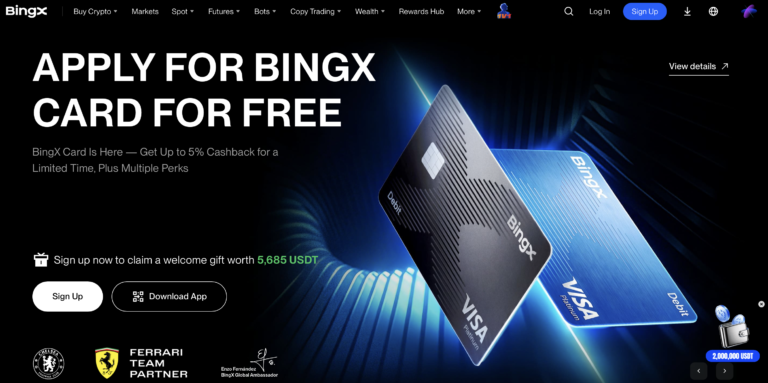
Is BingX Legitimate or a Scam?
Based on the evidence currently available, BingX.com is a real cryptocurrency trading platform, and this particular complaint does not establish that BingX itself demanded the reported $150,000 in withdrawal payments. However, the reported experience contains an extremely serious warning sign: the complainant says they were repeatedly told to send additional money before their cryptocurrency could be withdrawn. If those demands came from someone impersonating BingX or from a fraudulent platform using the BingX name, the activity would be consistent with a cryptocurrency investment or withdrawal scam.
That distinction is important.
The complaint alleges that the individual was instructed to download the BingX app and use it to access or cash out cryptocurrency. When they attempted to withdraw, they say they were told to pay $100,000 in fees. After making that payment, they were allegedly asked for another $45,000, followed by another $5,000 payment.
The reported total is therefore approximately $150,000 in additional payments.
That is an extraordinary amount of money to be described simply as a “withdrawal fee.”
At the same time, the report alone does not tell us whether those demands originated from BingX itself, an individual claiming to represent BingX, a fake website or application, or another intermediary.
That is why this investigation needs to distinguish the BingX platform from the specific people and payment instructions described in the complaint.
What Is BingX?
BingX is an established cryptocurrency trading platform offering spot and derivatives trading and other digital asset services.
Its official website currently publishes information about its trading products, fees, withdrawals and risk disclosures. BingX also warns users that cryptocurrency and derivatives trading carry substantial risks and that users can lose some or all of their account funds.
The existence of a legitimate cryptocurrency exchange, however, does not automatically authenticate every person, website, social media account or payment request using its name.
That distinction is particularly important in crypto because impersonation can occur outside the exchange itself.
The Complaint We Reviewed
The report describes a relatively straightforward starting point.
The complainant says they were instructed to download BingX and use the application to cash in or withdraw cryptocurrency.
At some point, they attempted to withdraw their money.
According to the report, the withdrawal did not proceed normally.
Instead, the complainant says they were told they needed to pay a $100,000 fee before the withdrawal could be completed.
They say they paid it.
Then another requirement allegedly appeared.
The next demand was approximately $45,000.
According to the report, that payment was also made.
Then another $5,000 was allegedly requested.
At that point, the reported additional payments reached approximately $150,000.
This is the central issue we believe readers should pay attention to.
A $150,000 Withdrawal Requirement Requires Extraordinary Verification
There is a major difference between an ordinary cryptocurrency network fee and being instructed to send $100,000, followed by $45,000 and then $5,000, in order to access an existing balance.
Cryptocurrency networks can have transaction fees.
Exchanges can also charge trading and withdrawal fees.
But those fees are normally described within a published fee structure rather than appearing as escalating demands after a user attempts to withdraw.
BingX publishes its fee information publicly, including trading and deposit and withdrawal-related information.
That makes the reported sequence particularly important to investigate.
If someone claims a withdrawal is blocked until the customer transfers a huge additional amount of cryptocurrency, the correct response should not be to immediately pay.
The correct response is to independently verify the requirement through the exchange’s official support channels.
The Pattern Is More Important Than the Amount
The dollar figures make this complaint striking, but the sequence is even more important.
The reported pattern is:
The user attempts to withdraw.
A payment is required.
The payment is made.
Another payment becomes necessary.
That payment is made.
Another payment appears.
This type of escalating withdrawal requirement is a recognized warning sign in cryptocurrency fraud.
The Federal Trade Commission specifically warns that fraudulent crypto investment platforms may show victims apparent account balances and then prevent withdrawals unless the victim pays additional fees.
The FTC has also reported that victims of crypto investment scams sometimes make a small withdrawal successfully before being told they must send additional cryptocurrency when they attempt to withdraw larger amounts.
The important point is that a withdrawal fee should never be accepted simply because someone says it exists.
It needs to be independently verifiable.
Is BingX Asking Users to Pay $100,000 to Withdraw?
We found no evidence in the material available for this review establishing that BingX’s official platform requires users to pay a $100,000 withdrawal fee, followed by $45,000 and $5,000 payments.
BingX’s public fee information does not establish such a requirement.
That doesn’t prove exactly what happened to the complainant.
It does mean we should not automatically attribute the reported payment demands to BingX without transaction records and communications demonstrating that the instructions came from an official BingX channel.
This is an important difference between investigating a complaint and making an unsupported accusation.
BingX Has an Official Verification Tool
One of the most useful pieces of information for anyone who has been contacted by someone claiming to represent BingX is the company’s official verification system.
BingX provides a verification tool that allows users to check whether a website, email address, telephone number or social media account is an official BingX channel.
The service covers a wide range of communication platforms, including Telegram, X, Discord, WhatsApp, Facebook and other social networks.
That is important because the platform on which someone contacts you is not enough to establish their identity.
A person can use BingX’s name without being BingX.
A social media profile can copy the company’s branding.
An email can contain the company name while being sent from an unrelated domain.
A website can look almost identical to the genuine exchange.
Verification needs to happen at the account or domain level.
BingX Says Its Representatives Will Not Privately Request Funds
BingX’s official verification information contains an especially important warning.
The company states that its official representatives will not request funds or tokens through private messages.
That should be kept in mind when examining the complaint.
If the alleged $100,000 payment request came through a private conversation with somebody claiming to be a BingX representative, that would be a significant warning sign.
The same applies to subsequent requests for $45,000 and $5,000.
A customer should not assume that a person is legitimate merely because they know the customer’s account information or use BingX branding.
The Difference Between an Exchange Fee and a Payment Demand
This distinction deserves its own explanation because the two can sound similar.
A normal exchange fee is generally part of a documented pricing structure.
For example, an exchange might charge a stated fee for a particular type of transaction.
A suspicious payment demand tends to look different.
It may appear only after a withdrawal is requested.
It may be described as an “unlocking” payment.
It may be called a tax.
It may be described as an anti money laundering deposit.
It may be labeled a security requirement.
It may be presented as a blockchain verification payment.
The terminology can change.
The underlying demand remains the same:
Send more money before you can access the money you already have.
That is where investors should stop and independently verify everything.
The Report Does Not Establish Whether the App Was Genuine
Another unanswered question is particularly important.
The complainant says they were told to download the BingX app.
But where did the download link come from?
Was it downloaded through an official app store?
Was the publisher verified?
Did the link originate from BingX.com?
Was it sent through a text message?
Was it supplied by an individual?
Was the application actually published by the legitimate BingX entity?
These details can dramatically change an investigation.
A fraudulent application can be given a familiar name.
A fake website can use the same colors and logos.
An attacker can tell someone to download an application that looks legitimate while controlling the account or interface behind it.
Therefore, “I downloaded the BingX app” isn’t sufficient evidence that every subsequent communication originated from BingX.
Look at the Website Address Carefully
Cryptocurrency impersonation often depends on small differences in domain names.
A user might see a website that looks like BingX and assume it is official.
The important question is the exact domain.
For this review, the official website supplied in the complaint is BingX.com.
Anyone dealing with an alleged BingX representative should avoid relying on a link supplied in an unsolicited message.
Instead, manually navigate to the company’s official website and begin verification from there.
BingX’s own verification service exists specifically to help users determine whether a website or communication channel is official.
Why the $100,000 Figure Matters
The size of the alleged first fee is unusual enough that it deserves careful examination.
A $100,000 payment is not a routine amount that an investor should transfer simply because a person on the other end of a chat says it is necessary.
If someone says the fee is based on a percentage of your account balance, ask for the written fee schedule.
If they say it is a tax, ask which authority imposed it.
If they say it is a blockchain requirement, identify the blockchain and verify the claim independently.
If they say it is required to unlock the account, ask where that requirement appears in the platform’s published terms.
If they cannot provide an independently verifiable answer, do not send the money.
“Pay to Withdraw” Is a Major Warning Sign
There is nothing inherently suspicious about an exchange charging a disclosed withdrawal fee.
The problem is the pay-to-release pattern.
The FTC describes fraudulent investment platforms where victims are told they cannot withdraw unless they pay additional fees.
The agency’s guidance is especially relevant because it describes situations in which a website appears to show investment growth but then introduces additional charges when the victim attempts to withdraw.
That is very close to the structure described in this complaint.
Again, this does not prove that BingX itself operated the reported scheme.
It means the behavior described by the complainant should be treated as a serious fraud indicator.
The Cryptocurrency Payment Method Creates Additional Risk
If the alleged $100,000, $45,000 and $5,000 payments were made in cryptocurrency, recovering the money can be considerably more difficult.
The FTC explains that cryptocurrency payments generally do not have the same protections as credit card transactions and are typically not reversible.
That is why blockchain evidence becomes so important.
A victim should preserve:
The transaction hash
The receiving wallet address
The sending wallet address
The cryptocurrency used
The exact amount
The date and time
The exchange used to purchase or send the crypto
Screenshots of the instructions
Emails
Chat messages
Any invoices or fee notices
Those details can potentially establish where the money went.
Follow the Blockchain, Not Just the Conversation
One of the strongest investigative approaches in a cryptocurrency complaint is to reconstruct the transaction history.
Suppose the victim was told:
“Send $100,000 to this wallet.”
The first question should be:
What wallet?
Then:
Was that wallet actually controlled by BingX?
Then:
Where did the funds move afterward?
Blockchain records may not immediately identify the person behind an address, but they can establish the movement of the assets.
This is often more useful than arguing about screenshots of an account balance.
A screenshot can be manipulated.
A blockchain transaction is a different kind of evidence.
BingX Provides a Withdrawal Refund Request Process
BingX also has a published withdrawal refund request process that asks users for transaction information such as withdrawal and refund transaction IDs and supporting communications.
That is worth noting because it gives affected users a legitimate route for presenting transaction evidence directly to the platform.
Anyone with a disputed withdrawal should keep the original transaction information rather than deleting it after contacting support.
What We Would Want to See Before Attributing This Complaint to BingX
There are several pieces of evidence that could substantially strengthen the complaint.
The first would be the exact website or application used.
The second would be the email addresses involved.
The third would be the identity of the person who instructed the victim to pay.
The fourth would be the cryptocurrency wallet addresses receiving the alleged fees.
The fifth would be blockchain transaction hashes.
The sixth would be screenshots or copies of the actual fee demands.
The seventh would be evidence showing whether the payments were requested inside the official BingX platform or outside it.
Without these details, it is impossible to confidently determine whether this was an internal BingX dispute, a compromised account, a third party, or a complete impersonation.
What If Someone Says the Money Is “Locked”?
A locked cryptocurrency account can have legitimate explanations.
Exchanges can restrict accounts for security, compliance or other operational reasons.
But the explanation should be independently verifiable.
A user should not automatically accept a private message saying:
“Your account is frozen. Send $5,000 and we will unlock it.”
Instead, access the exchange independently and contact official support.
BingX publishes official support information, including its support email address and other contact options.
Never use a support number supplied by the person demanding the money.
What If the Person Says the Payment Is a Tax?
This is another area where caution is essential.
A person may claim that a tax, government charge or regulatory payment must be made before funds can be withdrawn.
That claim should be independently verified with the relevant tax or regulatory authority.
The payment instructions matter too.
A request to send cryptocurrency to a private wallet to supposedly satisfy a government obligation should be treated as highly suspicious.
The FTC specifically warns that scammers can impersonate authorities and demand cryptocurrency payments to resolve supposed legal or financial problems.
What If the Fee Keeps Increasing?
That is arguably the most concerning part of the report.
The alleged sequence went from:
$100,000
to $45,000
to $5,000.
If accurately reported, the victim was not presented with one clearly defined cost.
The requirement kept changing after money had already been sent.
That is precisely when an investor should stop making payments.
Do not assume that paying the latest demand will finally unlock the account.
The FTC has documented cases where victims were repeatedly told to send more cryptocurrency for supposed fees but never received their money back.
Our Assessment of the Complaint
The reported experience contains major red flags.
The alleged $100,000 withdrawal payment is extraordinary.
The subsequent $45,000 demand is another major concern.
The reported $5,000 requirement compounds the problem.
Most importantly, the complainant says the payments were made but the withdrawal still did not occur.
That pattern is not something an investor should ignore.
However, we cannot responsibly conclude from the complaint alone that BingX.com itself is a scam.
The evidence available for this review does not establish that BingX officially demanded the three payments.
BingX is a real cryptocurrency exchange with a public website, published fee information, official support channels and an official verification tool.
The more appropriate conclusion is:
The reported payment demands are highly suspicious and consistent with known cryptocurrency withdrawal scam patterns, but additional evidence is required to determine whether the conduct originated from BingX, an impersonator, a fraudulent intermediary or another party.
What Investors Should Learn From This Case
There is a valuable lesson here that extends beyond BingX.
Never confuse a displayed cryptocurrency balance with money you can actually withdraw.
Never assume that a person who knows your account number is an official representative.
Never send a huge additional payment simply because someone says it will release your existing funds.
Never rely exclusively on a link sent through a private conversation.
And never let a previous payment convince you that the next payment must be the final one.
Once an alleged withdrawal process becomes a series of escalating payments, stop and investigate.
If You Have Experienced Something Similar
If you believe someone used BingX’s name to obtain money from you, preserve the evidence before deleting messages or closing accounts.
Start with the original communication.
Record the exact domain.
Record the sender’s email address.
Save the telephone number.
Save the social media account.
Save the wallet addresses.
Save every transaction hash.
Then use BingX’s official verification system to determine whether the relevant communication channel was genuine.
If cryptocurrency was transferred, contact the exchange or service you used to send the funds as soon as possible and report the transaction as suspected fraud.
The FTC also recommends reporting cryptocurrency fraud through ReportFraud.gov and explains that acting quickly can be important when money has already been sent.
Useful Resources
FTC cryptocurrency scam guidance:
FTC: What To Know About Cryptocurrency and Scams
FTC investment scam guidance:
FTC: Investment Scams
FTC fraud reporting:
Report Fraud to the FTC
Final Verdict
Is BingX legitimate?
Based on the evidence reviewed, BingX.com appears to be a legitimate cryptocurrency trading platform, and this complaint alone does not provide sufficient evidence to classify BingX itself as fraudulent.
But the reported withdrawal experience is extremely concerning.
A demand for $100,000, followed by $45,000 and another $5,000 before cryptocurrency can supposedly be withdrawn is not something an investor should treat as routine without independent verification.
The most important unanswered question is therefore not simply:
“Is BingX a scam?”
It is:
“Who actually demanded these payments, and where did the money go?”
That question can be answered only by examining the original communications, the exact website or application involved, the payment instructions and, most importantly, the blockchain transaction records.
Until those details are established, the fairest conclusion is that the reported conduct displays serious characteristics associated with cryptocurrency withdrawal fraud, while the evidence presently available does not establish that BingX.com itself was responsible.