
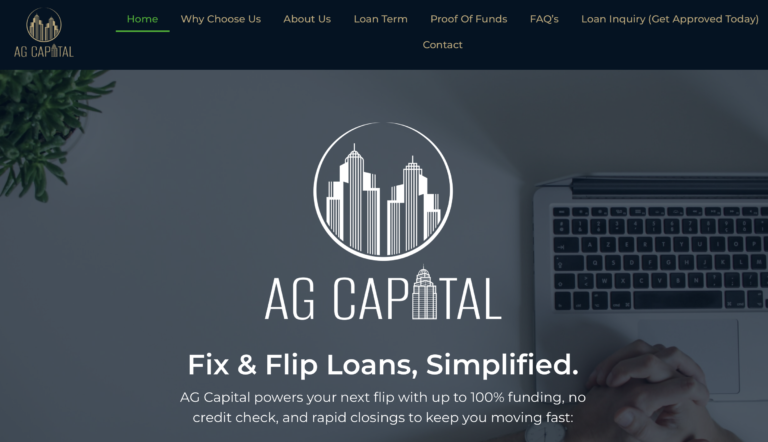
Not every investment opportunity begins with a search engine. Some are introduced by a friend, others through professional networks, and many start with a conversation about an opportunity that appears to offer consistent returns. In the world of private investments, personal introductions often carry as much weight as the investment itself. That is why taking time to understand the company behind the opportunity is just as important as understanding the numbers being presented.
If you’re researching AG Capital LLC, you’re likely looking for information that goes beyond promotional material. This review examines the company’s reported business model, explores how private lending opportunities generally work, and highlights the importance of understanding where returns come from before making any financial commitment.
Understanding AG Capital LLC
AG Capital LLC has been presented as a company involved in private real estate lending, with a focus on funding short-term residential renovation projects, commonly known as fix-and-flip properties.
Private lending is a well-established part of the real estate industry. Investors provide capital, borrowers use those funds to complete projects, and returns are generated through the repayment of those loans under agreed terms.
Like any private investment, however, each opportunity should be evaluated on its own merits. Understanding how the company operates, how projects are selected, and how investor funds are managed is an important part of conducting thorough research.
A Reported Description of the Business Model
The following summary reflects information reported to BrokersLitmus and should not be interpreted as applying to every investor or every interaction involving AG Capital LLC.
According to the information received, the company was presented as providing funding for multiple fix-and-flip projects within the Atlanta property market. The reported investment model described projects with an average duration of approximately six months and indicated that investors could receive monthly returns based on an annual percentage.
The information also described the availability of an investment fund designed to accept new capital immediately rather than waiting for individual projects to become available.
This description reflects one reported explanation of the business model. Anyone considering a private investment should independently verify how funds are allocated, how returns are generated, and what documentation supports the investment structure.
Looking Beyond the Percentage
One of the easiest aspects of any investment to compare is the projected return.
It is also one of the easiest aspects to misunderstand.
A percentage tells you what may be expected. It does not explain how that outcome is achieved.
The more useful question is often much simpler:
What activity is producing those returns?
If the investment is based on property lending, understanding the lending process becomes just as important as understanding the projected income.
Who identifies the projects?
How are borrowers assessed?
What happens if a project takes longer than expected?
How is investor capital protected throughout the process?
Answers to these questions help explain the business itself rather than focusing only on the outcome.
Understanding the Journey of Your Investment
At BrokersLitmus, we encourage readers to think about the journey their money takes after it leaves their account.
Many investment discussions begin with expected returns, but understanding the route those funds follow can provide a much clearer picture of the opportunity itself.
Where is the money held?
How is it allocated?
Who is responsible for overseeing each stage?
How are repayments distributed back to investors?
When you can follow that journey from beginning to end, it becomes much easier to understand the investment rather than simply relying on projected performance.
The clearer the path, the clearer the decision.
Transparency Is Built Through Explanation
Transparency is not simply about making documents available.
It is about making information understandable.
A company should be able to explain its business model in language that investors can follow without unnecessary complexity.
That includes explaining how opportunities are selected, how risks are managed, what happens when projects encounter delays, and how investors are kept informed throughout the investment period.
Clear explanations often provide greater confidence than impressive marketing language.
Written Information Should Support Verbal Conversations
Investment opportunities are frequently introduced through conversations.
Those conversations can be informative, but they should always be supported by written documentation.
Offering documents, contracts, repayment schedules, and investment agreements should reinforce what has been discussed rather than introducing unexpected differences.
Taking time to compare written information with verbal explanations helps ensure that expectations are based on documented facts rather than memory alone.
Every Investment Deserves Ongoing Research
Research does not end once an investment decision has been made.
Businesses evolve.
Markets change.
Projects progress.
New information becomes available.
Returning to your research periodically helps ensure your understanding continues to reflect current information rather than assumptions formed months earlier.
This habit encourages informed decision-making throughout the life of an investment rather than only at the beginning.
A Broader Perspective
This AG Capital LLC Review is intended to encourage thoughtful research and informed decision-making rather than quick conclusions.
Private lending can be a legitimate part of the real estate sector, but every investment opportunity deserves careful evaluation based on transparency, documentation, and a clear understanding of how the business operates.
Whether researching AG Capital LLC or another private investment company, the strongest decisions are usually made by people who take time to understand the complete picture rather than focusing on projected returns alone.
Long-term confidence rarely comes from promises. It grows from understanding how a business works, asking informed questions, and continuing to learn as new information becomes available.