
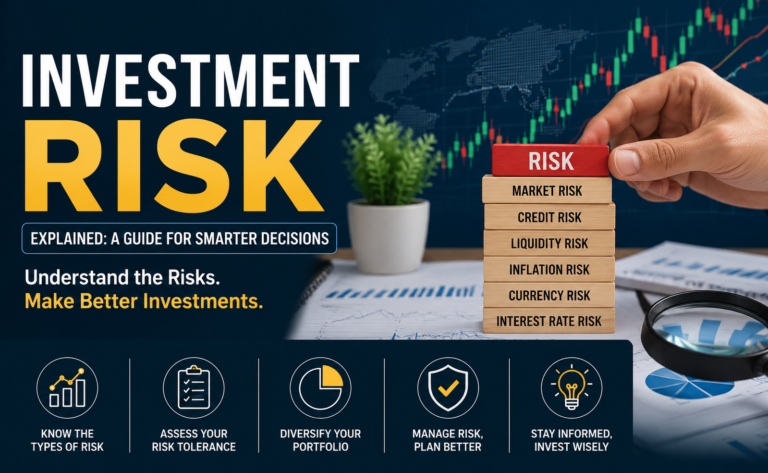
Every investment comes with some level of investment risk. Whether you are considering shares, exchange-traded funds (ETFs), mutual funds, bonds, cryptocurrencies or forex, understanding investment risk is essential before committing your money. While many people focus on potential returns, recognising the factors that influence risk can help you make more informed financial decisions and set realistic expectations.
This guide explains what investment risk means, the common types of risk investors should understand and practical ways to evaluate investment opportunities before selecting an investment platform.
What Is Investment Risk?
Investment risk refers to the possibility that an investment may not perform as expected. Market prices can rise or fall because of economic conditions, interest rate changes, inflation, company performance or global events. These changes may result in lower returns or, in some cases, financial losses.
Understanding investment risk does not mean avoiding investments altogether. Instead, it allows investors to weigh potential rewards against possible risks and make decisions that align with their financial objectives.
Why Understanding Investment Risk Matters
Learning about investment risk helps investors develop realistic expectations before entering any financial market. No investment offers guaranteed returns, and every asset class behaves differently under changing market conditions.
When investors understand the risks involved, they are often better prepared to respond to market fluctuations without making emotional decisions. This knowledge also encourages long-term planning rather than reacting to short-term changes in market prices.
Common Types of Investment Risk
There are several forms of investment risk, each affecting investments in different ways.
Market risk refers to the possibility that the overall financial market may decline because of economic or political events.
Inflation risk occurs when rising prices reduce the purchasing power of your investment returns over time.
Liquidity risk arises when an investment cannot easily be bought or sold without affecting its market value.
Interest rate risk primarily affects bonds and fixed-income investments, where changes in interest rates can influence market prices.
Currency risk becomes relevant when investing in international markets, as exchange rate fluctuations may affect returns.
Understanding these different risks allows investors to build a more balanced investment strategy.
How to Assess Investment Risk Before Investing
Before opening an account with any investment platform, investors should carefully assess the level of investment risk involved. This begins with researching the products offered, understanding how the markets operate and reviewing any educational resources provided by the platform.
It is also important to understand the fee structure, investment objectives and any potential limitations associated with specific products. Taking time to compare different investment platforms can help investors identify those that provide transparent information and support informed decision-making.
How Diversification Can Reduce Investment Risk
Diversification is one of the most widely recognised approaches to managing investment risk. Rather than investing all available funds into a single asset or sector, diversification involves spreading investments across different asset classes, industries and geographical regions.
Although diversification cannot eliminate losses, it may reduce the impact that poor performance in one investment has on an overall portfolio. Investors often review their portfolios regularly to ensure they remain aligned with changing financial goals and market conditions.
Understanding Your Personal Risk Tolerance
Every investor has a different level of comfort with investment risk. Factors such as age, financial goals, income, investment experience and the length of time available for investing all influence an individual’s risk tolerance.
Someone saving for retirement over several decades may accept greater short-term market fluctuations than someone investing for a shorter-term financial goal. Understanding your own circumstances is an important part of choosing investments that suit your objectives.
Practical Tips for Managing Investment Risk
Managing investment risk begins with education and careful planning. Investors should avoid making decisions based solely on market excitement or promotional material. Instead, taking time to research investment products, compare platforms and understand the potential risks associated with each opportunity can contribute to more informed decision-making.
Reviewing investments periodically, maintaining realistic expectations and continuing to improve financial knowledge are all habits that support responsible investing over the long term.
Frequently Asked Questions
What is investment risk?
Investment risk is the possibility that an investment may lose value or produce returns that are lower than expected because of changing market conditions or other financial factors.
Can investment risk be avoided?
No. Every investment involves some degree of investment risk. The goal is not to eliminate risk entirely but to understand it and manage it appropriately.
Why is diversification important?
Diversification helps reduce investment risk by spreading investments across different assets, sectors and markets rather than concentrating funds in a single investment.
How can beginners understand investment risk?
Beginners can improve their understanding of investment risk by learning about different investment products, researching financial markets, comparing investment platforms and continuing to build their financial knowledge over time.
Final Thoughts
Understanding investment risk is one of the most valuable skills any investor can develop. While financial markets will always involve uncertainty, learning how different risks affect investments allows individuals to make more informed decisions and build investment strategies that match their personal goals.
By researching carefully, comparing investment opportunities and recognising that risk and reward go hand in hand, investors place themselves in a stronger position to navigate financial markets responsibly and confidently.