
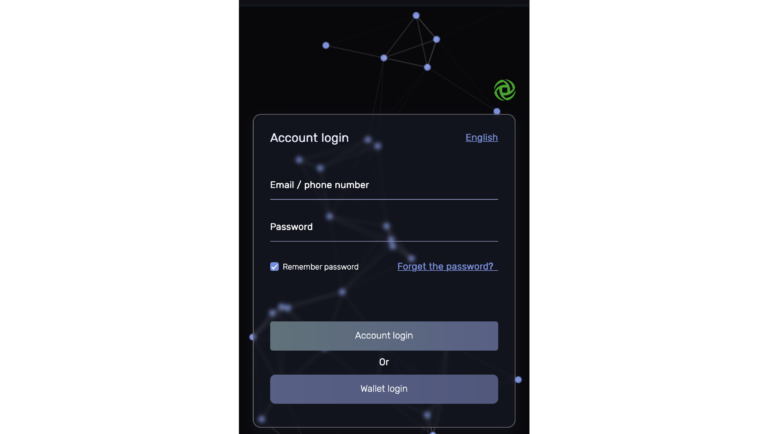
Is Derivmarkts Legit?
Based on the evidence we could independently verify, we would not consider Derivmarkts.com a platform that investors should trust with money without substantial additional verification. The complaint reviewed for this article describes a particularly concerning withdrawal sequence involving supposed “verification funds,” a subsequent accusation of money laundering and then the disappearance of the party claiming to handle the verification. Separately, available domain information shows that Derivmarkts.com is a very recently created website, with a December 9, 2025 registration date and hidden WHOIS ownership information.
There is an important distinction here. We cannot establish from one complaint that the people involved were necessarily the same legal entity operating the website, nor can we responsibly state that every person associated with the Derivmark name participated in fraudulent conduct.
What we can do is examine the evidence surrounding Derivmarkts.com, compare it with the experience reported to Brokers Litmus, and identify the specific points where a prospective investor should stop and investigate further.
In this case, there are several.
What Is Derivmarkts.com?
Public website analysis identifies Derivmarkts.com under the title “Derivmark.” The available description presents it as digital trading software supporting cryptocurrency operations involving assets such as Bitcoin, Ethereum and Ripple. It also references cryptocurrency trading, blockchain, digital assets, decentralized finance and related services.
That places the website firmly in a financial category where transparency matters.
A cryptocurrency trading website does not necessarily need to have been online for years to be legitimate. New businesses can enter the market.
However, when a newly registered financial website is combined with a complaint involving failed withdrawals and additional “verification” payments, the lack of an established operating history becomes more relevant.
It means investors have less independent history from which to judge the business.
The Complaint We Received
The report reviewed for this article describes a sequence that began relatively normally.
The individual says they were asked whether they wanted to trade cryptocurrency.
They were then guided through the process of opening an account and completing trades.
According to the report, the early trading activity appeared successful.
The problem emerged when the individual attempted to withdraw the profits.
The withdrawal allegedly failed.
Instead of receiving the funds, the individual says they were told they needed a blockchain to complete the process.
They were then guided toward what was described as a blockchain verification process.
The complainant says they transferred “verification funds” as instructed.
After doing so, they were allegedly accused of money laundering.
The person or entity supposedly handling the verification reportedly told them that the verification money would be returned once the matter had been cleared.
The complainant says they were eventually told that they had been verified.
Then communication stopped.
That final part is particularly concerning.
The First Question: Why Was a Separate Verification Payment Necessary?
A cryptocurrency transaction already exists on a blockchain when the transaction has been confirmed on that network.
A blockchain isn’t an independent customer service department that an investor normally needs to pay in order to “verify” their identity or release trading profits.
This is where terminology can become misleading.
Someone may use phrases such as:
“Blockchain verification”
“Blockchain activation”
“Blockchain security deposit”
“AML verification”
“Wallet validation”
“Transaction authentication”
Those phrases can sound technical.
But technical language does not make a payment request legitimate.
The investor should always ask:
Who is receiving the money?
Why is the payment necessary?
Where is the requirement documented?
Can the requirement be independently confirmed with the actual exchange or service provider?
If those questions cannot be answered, don’t send the payment.
Blockchain Verification and Identity Verification Are Different Things
This distinction is worth making because the word “blockchain” is sometimes used as if it were a regulatory authority.
It isn’t.
A blockchain is a distributed ledger technology.
Networks such as Bitcoin and Ethereum record transactions.
They don’t independently decide whether a person has committed money laundering.
Identity and anti money laundering checks are generally performed by regulated businesses, financial institutions, exchanges and other relevant service providers.
So if somebody tells an investor:
“Your blockchain has accused you of money laundering.”
that wording deserves very careful scrutiny.
A blockchain does not ordinarily send a customer a message accusing them of money laundering.
If there is an actual compliance issue, the investor should be able to identify the company responsible for the compliance review and the basis for the restriction.
That is very different from sending cryptocurrency to an unexplained wallet because somebody says “the blockchain” requires it.
The Money Laundering Accusation Is a Major Red Flag
The report says the complainant was accused of laundering funds after sending the supposed verification payment.
That is a significant development.
A legitimate compliance investigation can certainly involve questions about the source of funds.
Financial institutions may ask customers where money came from.
Cryptocurrency exchanges may conduct transaction monitoring.
Accounts can be restricted for compliance reasons.
But a compliance concern should not automatically translate into:
“Send us more cryptocurrency and we will release your money.”
That is exactly the kind of situation in which an investor should stop communicating through the original contact and independently reach the purported company’s official support channel.
The person who caused the problem should not also be the only person capable of resolving it.
The Website Is Extremely Young
The domain history is one of the more objective pieces of information available.
ScamAdviser’s technical record lists the WHOIS registration date for Derivmarkts.com as December 9, 2025. It also reports a January 4, 2026 update and says the WHOIS ownership information is hidden.
That makes the domain very young relative to the financial services it appears to offer.
Domain age is not proof of fraud.
A legitimate startup can launch a website today.
But an online trading platform asking customers to trust it with cryptocurrency has a much higher burden of transparency than an ordinary new blog or small online store.
A young domain therefore becomes more meaningful when it appears alongside other concerns.
The Website Uses a Valid SSL Certificate
There is at least one technical point that should not be exaggerated.
Derivmarkts.com has a valid SSL certificate. The available technical record identifies a Let’s Encrypt Domain Validated certificate.
That means the connection between the visitor and the website can be encrypted.
It does not prove that the business behind the website is legitimate.
This distinction is frequently misunderstood.
HTTPS protects data while it travels between your browser and the website.
It doesn’t tell you who owns the website.
It doesn’t establish that a financial company is licensed.
It doesn’t verify that an investment exists.
And it certainly doesn’t guarantee that you will be able to withdraw your money.
A fraudulent website can have HTTPS just as easily as a legitimate one.
The Domain Ownership Information Is Hidden
The available domain analysis reports hidden WHOIS information for Derivmarkts.com.
Privacy protection on a domain is not inherently suspicious.
Many legitimate businesses and individuals use privacy services.
But for a financial platform, investors should still be able to identify the legal business behind the service.
There is a difference between:
“The domain owner’s personal information is privacy protected.”
and:
“The company providing my financial service cannot be independently identified.”
The second situation is much more serious.
If you cannot determine the legal entity, jurisdiction, management, regulatory status and physical business presence behind a trading platform, you have not completed basic due diligence.
The Name “Derivmark” Creates Another Verification Question
The website identifies itself as Derivmark.
There are also other domains and businesses using very similar names.
For example, public search results identify Derivmark.xyz as a website describing Derivmark as digital trading software for cryptocurrency trading.
There is also a separate Derivmark.com domain that has been analyzed by third party website risk services. Its information is not enough to establish that it is operated by the same entity as Derivmarkts.com.
That distinction matters.
Similar names don’t automatically indicate common ownership.
They do, however, make it more important to verify the exact domain you are dealing with.
A trader should never assume that:
Derivmark
Derivmark.com
Derivmarkts.com
and another similarly named website
are all the same company.
They may not be.
A Search Result Is Not Proof of Corporate Identity
This is an area where investors can easily be misled.
Suppose you search a company’s name and find a corporate record using a similar name.
That does not necessarily establish that the website you visited belongs to that corporation.
The website should disclose its legal entity.
The entity should be independently verifiable.
The company’s regulatory status should match the financial services it offers.
The contact details should correspond.
The domain should be connected to the disclosed business.
If those pieces don’t line up, the corporate record may have little relevance to the website you are considering.
The “Profit First, Problem Later” Pattern
The reported sequence contains another interesting feature.
The complainant says they were initially guided through trades and apparently made profits.
The problem emerged when they tried to withdraw.
This is worth highlighting because an investor’s experience can change dramatically between depositing and withdrawing.
Someone may see a successful trade.
They may see a profitable account balance.
They may even believe they have successfully generated investment returns.
None of those things necessarily proves that the platform will release the money.
The real test is whether the withdrawal process works under ordinary conditions.
That is why investors should understand withdrawal requirements before depositing significant amounts.
A Small Successful Withdrawal Can Be Misleading
This is an important lesson for anyone researching online trading platforms.
A successful small withdrawal can provide some evidence that a platform is functional.
But it doesn’t prove that larger withdrawals will work.
Likewise, a profitable trading screen doesn’t prove that the underlying assets exist in the amount displayed.
The most meaningful question is whether the platform can demonstrate that customer assets are actually held and that withdrawals are governed by transparent, documented rules.
Investors should not wait until they have deposited their life savings to discover the answer.
The “Verification Funds” Problem
The phrase “verification funds” deserves particular attention.
There can be legitimate situations where financial services require deposits, collateral or account funding.
But a supposed verification payment should have a clear purpose.
If the customer is told:
“Send this amount so we can verify you.”
and then:
“You have now been verified.”
but the money isn’t returned and another explanation appears, the investor needs to stop.
Verification should establish something.
It shouldn’t become a mechanism for extracting another payment.
Why the Final Disappearance Matters
The report says that after the complainant was told they had been verified, communication stopped.
That is a particularly important part of the account.
A genuine compliance process can take time.
A genuine withdrawal can sometimes be delayed.
An account can legitimately be restricted.
But there should still be a recognizable organization behind the process.
There should be an identifiable support department.
There should be an explanation.
There should be documentation.
There should be a means of appealing or resolving the issue.
If the people who were communicating enthusiastically while deposits were being made suddenly disappear when the investor asks for their money back, that is a serious warning sign.
What We Found About Derivmarkts.com’s Online Footprint
Third party technical analysis currently identifies Derivmarkts.com as a young cryptocurrency related website with low apparent traffic and hidden WHOIS data. ScamAdviser also flags the website for several risk indicators, including its young domain age and the presence of cryptocurrency and high risk financial services.
ScamAdviser does not claim that its automated assessment is infallible, and its own report notes that algorithmic trust scores should not be treated as definitive proof.
That caveat is important.
We are therefore treating those findings as risk indicators, not as evidence that the site is criminal.
The more compelling concern comes from the combination of the technical findings and the actual withdrawal complaint.
What About the Company Behind the Website?
This is one area where the available evidence is insufficient. We could not independently establish from the sources reviewed a clearly disclosed, regulated legal entity behind Derivmarkts.com that explains who operates the platform and under which financial regulator it is authorized. That doesn’t automatically mean there is no company. It means the burden remains on the platform to make that information readily verifiable.
For a cryptocurrency trading service, investors should be able to determine: The legal company name. The country of incorporation. The physical business address. The regulator. The licence or registration number. The terms governing withdrawals. The custody arrangement. The entity receiving customer funds. The applicable dispute resolution process. If those details are difficult to establish, that’s a problem in itself.
What Investors Should Do Before Sending “Verification” Money
If a trading platform tells you that a payment is required before you can withdraw, stop.
Don’t immediately pay.
Instead, request the exact written policy.
Ask for the legal entity responsible.
Check the company’s regulatory registration independently.
Contact the company through a communication channel you found yourself rather than one supplied by the person pressuring you.
If cryptocurrency is involved, ask for the exact wallet address.
Then investigate the address and transaction history.
Most importantly, don’t assume that the fact you already deposited money means you should continue.
Past payments are not a reason to make future payments.
What If You Have Already Sent Money?
If you have already transferred cryptocurrency to someone connected with Derivmarkts.com, preserve everything. Don’t delete the conversations. Don’t close the account before obtaining your records. Don’t erase wallet addresses. Save screenshots. Save transaction hashes. Record dates and amounts. Keep copies of emails. Document every withdrawal request. Document every explanation you received. If someone accused you of money laundering, save that communication too. It may be important evidence.
Blockchain Evidence Can Help Reconstruct What Happened
If cryptocurrency was involved, the transaction hash is one of the most useful pieces of information you can preserve. It can establish that a particular amount of cryptocurrency moved at a particular time. Depending on the blockchain, you may also be able to see subsequent transfers.
That doesn’t automatically reveal the real identity of the recipient. But it can help investigators reconstruct the movement of funds. This is why a victim should never rely solely on screenshots of an online trading account. A screenshot can show what the platform claims. A blockchain transaction can show what happened to the cryptocurrency. Those are different forms of evidence.
What We Would Want to See From Derivmarkts.com
If the operator of Derivmarkts.com wants to address concerns raised by this review, there are several straightforward questions that could be answered publicly.
Who is the legal entity operating Derivmarkts.com?
Where is it incorporated?
Which regulator authorizes its cryptocurrency services?
What licence or registration number applies?
Why would a customer need to send separate “verification funds” to a blockchain related party?
Who received those funds?
Where are the written withdrawal requirements?
What is the official procedure when an account is flagged for suspected money laundering?
Who handles customer complaints?
What is the company’s official address?
Clear answers to those questions would give investors substantially more information than promotional claims about cryptocurrency trading.
Our Assessment of Derivmarkts.com
The available evidence presents multiple reasons for caution.
The domain is very young, having been registered on December 9, 2025.
WHOIS ownership information is hidden.
The website presents itself as a cryptocurrency trading platform, placing it in a high risk financial category.
Third party website analysis has identified several risk indicators associated with the domain.
And the complaint submitted to Brokers Litmus describes a classic point of failure in an online investment relationship: the account appeared profitable until the investor attempted to withdraw, after which an additional payment was allegedly demanded.
The subsequent “money laundering” accusation and disappearance of the supposed verification party make the report particularly concerning.
However, we are not going to turn those facts into an unsupported criminal accusation.
We have not independently established that the operator of Derivmarkts.com committed fraud.
What we can say is that the combination of the website’s limited history, lack of readily verifiable ownership information, cryptocurrency trading claims and the reported verification payment makes Derivmarkts.com a high risk proposition that warrants extreme caution.
Is Derivmarkts.com a Scam?
The complaint is consistent with a cryptocurrency withdrawal fraud pattern, but the complaint alone does not prove that Derivmarkts.com itself operated the alleged scheme.
That is the most accurate conclusion we can reach from the evidence available.
The strongest warning sign is not the website’s design.
It isn’t the use of cryptocurrency.
It isn’t even the young domain.
It is the reported demand for additional “verification funds” after the investor attempted to withdraw, followed by an alleged money laundering accusation and the disappearance of the party handling the supposed verification.
That sequence deserves serious scrutiny.
Final Verdict
Derivmarkts.com should be approached with extreme caution.
Before depositing anything, prospective users should independently establish the identity of the company behind the website, its regulatory status, its withdrawal rules and the destination of customer funds.
Anyone who has already been told to send cryptocurrency as “verification funds” should stop making additional payments until the requirement has been independently verified.
And if someone claims that “the blockchain” has accused you of money laundering, ask for the actual legal entity conducting the compliance review.
A blockchain records transactions.
It does not replace a regulator, compliance department or law enforcement agency.
That distinction may sound small.
For someone trying to recover their money, it can be enormous.
Useful External Resources
Derivmarkts.com domain information:
ScamAdviser analysis of Derivmarkts.com
FTC cryptocurrency guidance:
FTC cryptocurrency scam guidance
FTC investment fraud information:
FTC investment scam guidance